

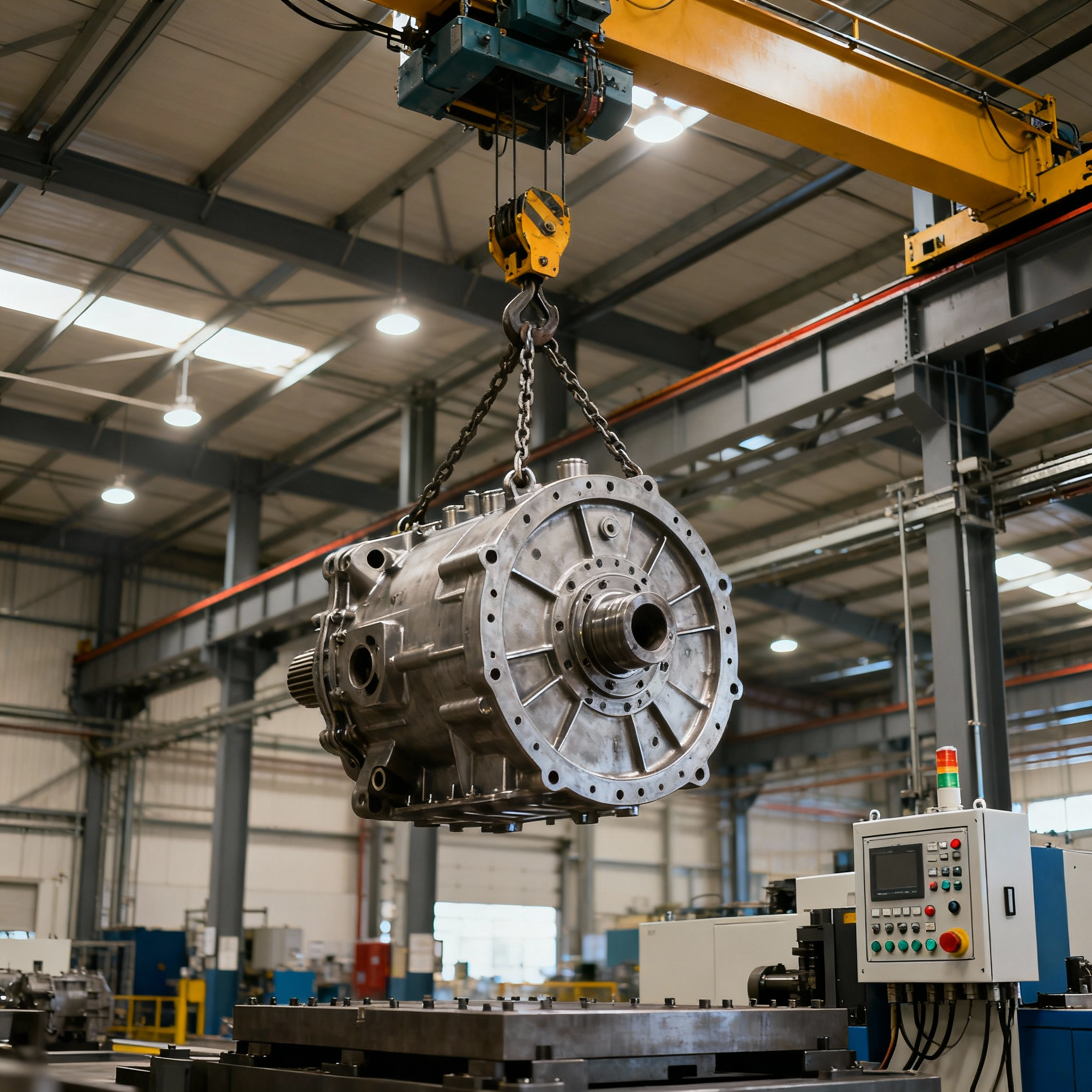
In industrial environments, a crane is more than a lifting machine—it’s a core component of production continuity. When a crane fails, an entire workflow can stall, causing delays, financial losses, and safety concerns. For this reason, the way a crane is engineered matters just as much as its lifting capacity.
This article explains how Steltech designs its cranes specifically for long-term reliability, focusing on structural durability, precise load control, and simplified maintenance. It is not about general crane theory, but about the engineering principles behind Steltech-made cranes.
1. Structural Strength Built on Optimized Steel Profiles
Steltech cranes use high-performance steel profiles engineered to withstand repetitive stress cycles. Instead of traditional straight-cut beams, the structural members are selectively reinforced based on expected load paths.
This provides key advantages:
-
Less vibration under dynamic loading
-
Reduced fatigue across the crane body
-
Improved stability during temperature variation
-
Higher load consistency across years of operation
This structural approach increases both safety and service life, especially in facilities with continuous production.
2. Precision Load Handling Through Micro-Motion Control
Lifting power alone is not enough—precision matters just as much. Steltech integrates micro-motion control systems that allow operators to move loads with millimetric accuracy.
This technology helps:
-
Minimize load sway, even during long travel distances
-
Improve safety in tight assembly environments
-
Reduce risk during mold placement or CNC machine loading
-
Support delicate operations where slight misalignment can halt production
The result is smoother, safer, and more predictable load positioning.
3. Active Safety Systems That React in Real Time
Unlike traditional cranes that rely mostly on passive safety features, Steltech cranes employ active safety monitoring. Sensors constantly track load distribution, motor current, movement angle, and thermal conditions.
Built-in mechanisms include:
-
Automatic stop when overload is detected
-
Protection against sudden voltage spikes
-
Thermal regulation to prevent overheating
-
Sway control to reduce unintended motion
-
Lockout features that stop unsafe directional movement
These systems continuously evaluate the crane’s condition and intervene before problems escalate.
4. Modular Components That Reduce Downtime
Steltech designs cranes with a modular architecture, allowing individual components to be serviced or replaced without dismantling the entire system.
Key benefits include:
-
Shorter maintenance times
-
Lower life-cycle cost
-
Faster part replacement
-
Greater availability of compatible spares
-
Less interruption to operational workflow
For companies where downtime equals financial loss, this modular approach is a major operational advantage.
5. Energy-Efficient Motors and Quiet Operation
The electric systems inside Steltech cranes combine optimized motors with inverter-based speed control. This results in:
-
Lower daily energy consumption
-
Reduced operational noise
-
Extended motor and brake lifespan
-
More controlled acceleration and deceleration
Energy efficiency is no longer a secondary feature—it’s part of modern industrial responsibility and cost management.