

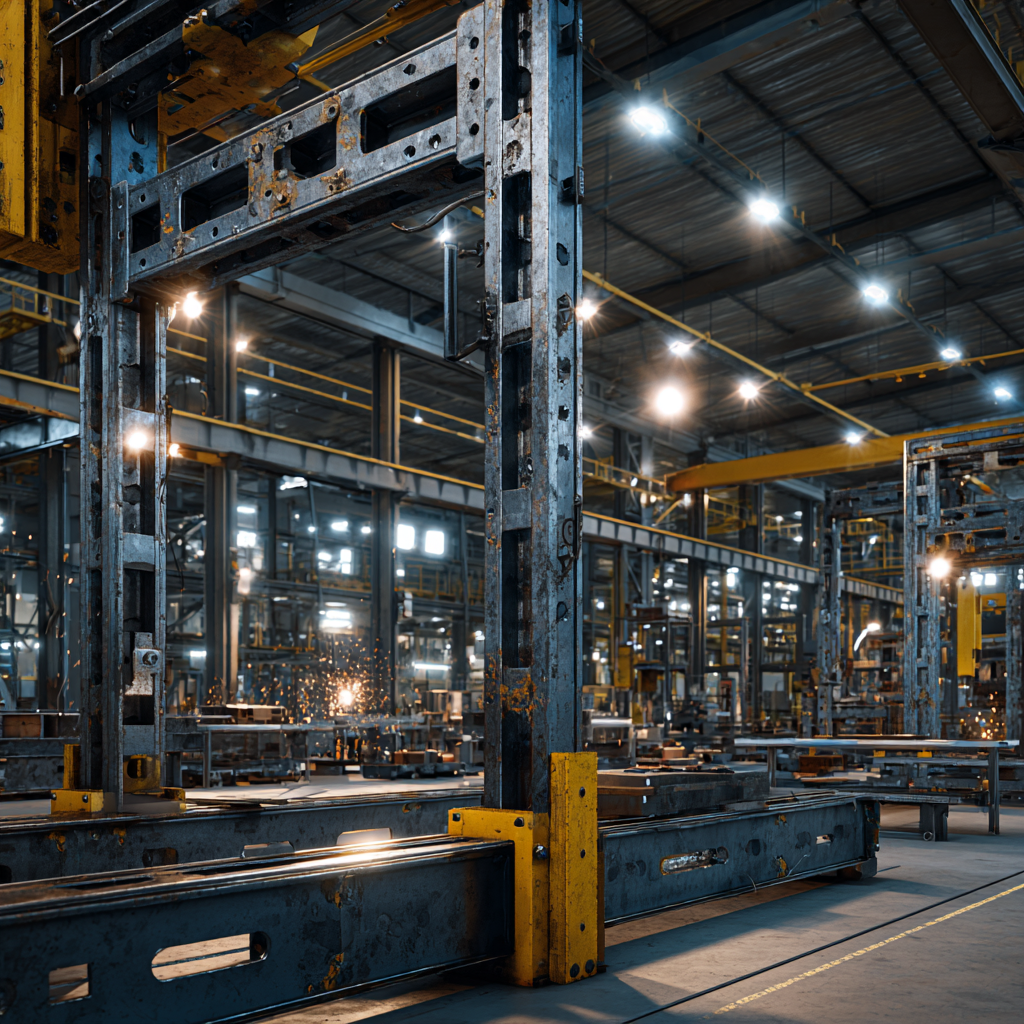
In the world of heavy-duty industrial machinery, the performance of a machine depends heavily on the strength and engineering of its steel structure. At Steltech, structural design is not just about building something that holds up — it’s about creating optimized systems that maintain stability, resist fatigue, and support long-term industrial reliability.
This blog explores how Steltech engineers its steel structures with precision, efficiency, and durability in mind.
1. Engineering Starts With the Right Steel Profiles
The foundation of every strong machine is the quality and geometry of the steel profiles used in its frame. Steltech relies on data-driven mechanical analysis to select the ideal profiles for each project.
Key considerations include:
-
Load-bearing requirements
-
Fatigue and stress cycles
-
Deflection limits
-
Weight-to-strength balance
-
Weldability and thermal performance
Rather than using generic steel beams, Steltech selects each profile based on calculated load paths. This ensures the machine’s frame maintains stiffness under high stress while remaining efficient in weight and cost.
2. Intelligent Reinforcement Where It Matters Most
Not all sections of a machine experience the same level of stress. Instead of overbuilding the entire structure, Steltech applies reinforcement only to strategic points areas with high torsion, bending moments, or repeated stress cycles.
This approach delivers multiple benefits:
-
Higher stability under dynamic loading
-
Lower material waste
-
Improved resistance to long-term fatigue
-
Reduced vibration and noise during operation
Precision reinforcement allows Steltech machinery to maintain structural integrity even in the most demanding environments.
3. Stress Simulation and Finite Element Analysis (FEA)
Before a single piece of steel is cut, Steltech performs detailed stress simulations using Finite Element Analysis (FEA).
These simulations identify:
-
Weak zones
-
Stress concentrations
-
Fatigue-prone edges
-
Expected deformation under load
-
Dynamic behavior during motion
By resolving potential problems digitally, Steltech avoids costly structural issues later in production and ensures superior long-term durability.
4. High-Quality Welding That Strengthens the Entire Frame
Weld quality is one of the most important factors in structural integrity. Steltech applies controlled welding procedures that ensure:
-
Proper penetration
-
Even heat distribution
-
Minimal distortion
-
High tensile strength at the joints
The result is a structure that behaves like a single unified component rather than separate pieces joined together.
5. Vibration and Fatigue Reduction for Long-Term Reliability
Heavy-duty machines are constantly exposed to vibration, torque, and repetitive loads. If not carefully engineered, these forces can lead to cracks or structural instability.
Steltech prevents this by:
-
Using optimized cross-sections
-
Adding anti-vibration geometry
-
Reinforcing transition zones
-
Balancing the entire structure’s stiffness
This reduces long-term fatigue and ensures the machine stays safe and reliable over years of operation.